• Saturday Morning Links

    Photo by Yves Alarie on Unsplash

    1. Ever heard of the Azores? This all started with a trail running video, which was great and is embedded below, where the Golden Trail Series was recently run in the Azores. The Golden Trail Series is like the bowl games and Super Bowl for trail running. In any event, this series of races were run in the Azores, which is a small archipelago in the middle of nowhere, but is part of Portugal, approximately 870 miles west of Lisbon in the North Atlantic Ocean. The actual name of the Azores is “Autonomous Region of the Azores” which sounds very official. There are nine islands that are part of the Azores. the theory is that the name of Azores was from “acor” which is a goshawk, or basically a hawk. There are approximately a quarter of a million people who live on the islands.

    2. Kind of appropriate this time of year, via ArtNetNews, an English archaeologist believes he has discovered what those in the 4th century to be the childhood home of Jesus Christ. Also relevant, via ArtNetNews, other archaeologists believe that they have found the location where Jesus hosted the Last Supper.

    3. Articles like this make me realize how little I know about a lot of things. I knew that Syracuse was a school in New York, but a town in Sicily? Sorry, but I was ignorant about that. Aeon on Plato’s travels to Syracuse, where he faced much debauchery in an attempt to get Dionysius to change his ways and that just didn’t happen.

    4. Need some good book recommendations? NPR has the best books of 2020 (and prior years as well). From staff picks, biographies and memoirs, comics and graphic novels, cookbooks, etc. Just organized in a handful of categories so that you can find something you would probably like.

    5. I don’t know why I get obsessed with things, but I love pens and I go through a lot of blue and black pens (red and green too) and this ended up being a wormhole I fell into from last week when looking at all of the pencils. Am I weird if I’m totally into this blue and black gel pen sampler and mechanical pencil sampler?

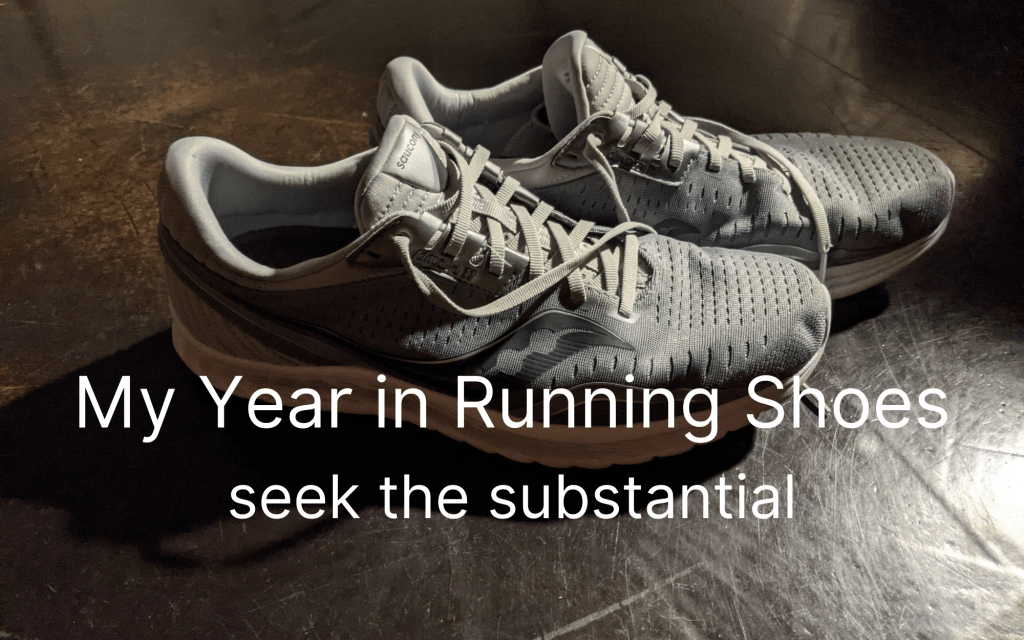
  • My Year in Running Shoes

    The year in running shoes started out in a bad way, but ended well. Like most people, when I purchase running shoes, I pretty much have to consider them an investment. I made one investment that didn’t pay off, two that had good performances, and two that excelled.

    Nike Epic React Flyknit 2 ($89.98 at the time of purchase): I like the Epic React, but it wasn’t my favorite shoe ever. The midsole was very forgiving and I thought that I could probably log a lot of miles in it, but I didn’t. For whatever reason, I just didn’t go to grab it when I wanted to run and that’s relatively abnormal. I also liked how it has a wide forefoot, my foot never felt cramped. I think that this shoe had a 10mm drop, which is a lot and maybe the reason why I didn’t grab it on a regular basis. I still wear them all of the time because I think they look fantastic and I’d buy another pair at $90 if they didn’t have such an extreme drop.

    Would I recommend? Yes, I did like these shoes quite a bit. I think as they continue to develop these shoes, I think they’ll probably continue to improve.

    Nike Vomero 14 ($140.00 at the time of purchase): Absolutely hated this shoe. I don’t even really like wearing this shoe around the house to get any use out of it. Another 10mm drop, 14mm in the forefoot and 24mm in the heel, but what I hated about this shoe is that there’s this air pocket underneath my toes. I guess the idea is to give your forefoot extra cushioning, but I never felt that. I just felt annoyed that I was continually stepping on this packet of air.

    Would I recommend? No. I did not enjoy this shoe.

    New Balance 1080 v 10 ($149.50 at the time of purchase): I did love this shoe, but hate the way it looked. I’m not a huge fan of the elfen heel, I simply don’t get that. I had no issues putting 400 miles on this shoe. The Fresh Foam X was terrific and it’s a legitimate midsole. The 1080v10 has an 8 mm drop, and weighs about 281 grams, which isn’t heavy by any means, but this is a shoe that you take out on consistent long runs and it will perform. A majority of my runs are 6 to 20 miles, with most of them being 6 as that’s when I get to run in the morning before work.

    Would I recommend? Absolutely. I just hate the elfen heel and that’s purely aesthetic. They are also expensive and I found other shoes for $40 cheaper that I like as much or better.

    New Balance 880 v 10 ($129.95 at the time of purchase): Because I was so in love with the Fresh Foam, but didn’t love the elfen heel, I picked up the 880’s and they are also ridiculously comfortable. As stated above, the Fresh Foam X is seriously comfortable. This was my Saturday morning shoe in the summer, where I’d run outside and be completely drenched and the concrete was hot at 8 in the morning. This thing is a tank. The difference between the 1080 and the 880 is weight, 304 grams, and a 10 mm drop. So it’s a heavy shoe to go on long runs in the dead of summer. I still wear this shoe and part of the reason why I didn’t put 400 miles on it was because I want to wear it and didn’t want to completely blow it out with 400 miles.

    Would I recommend? Yes, they’re heavy, but part of the reason why I didn’t put more miles on them was because I’m using them quite a bit around the house and I use them for when I work out with weights. So they’re continuing to be utilized, not just miles.

    Saucony Kinvara 11 ($110.00 at the time of purchase): I’ve fallen in love with this shoe. Everything about it is perfect for what I do. I typically run about 6 miles most mornings. That’s a shade under an hour of running for me. The Kinvara 11 is 233 grams, which is significantly lighter than the New Balance Shoes. I had no need for that added weight. The drop is only 4mm, 24.5 in the forefoot and 28.5 in the heel. I have never thought I needed a significant drop and just find these super comfortable. The PWRRUN midsole is light and responsive. It’s not too cushy and it’s not so firm that makes it uncomfortable. By far, I’ve loved running in this shoe more than any shoe the entire year. So much so, I went ahead and bought a black version. I’d also add that the Kinvara 11 is the most affordable shoe on the list at $110.

    Would I recommend? Hell yes.

    I’ll have a graph at the first of the year that details the miles run on each shoe. Yes, I’ve done that.

  • Saturday Morning Links

    Photo by Raph Howald on Unsplash

    1. Ever heard of Kiama? Me neither, but it’s just south of Sydney and the name Kiama is Aboriginal meaning “place where the sea makes a noise.” Do we have English words that have meaning like that? Anyway, Kiama is on the coast and one of the cool things that people know about is the Kiama blowhole, which is where depending on the tide, the wave will crash through a hole in one of the rocks on the beach and water goes flying in the air like a geyser.

    2. Ever thought a lot about pencils? I know I haven’t thought about them in a really long time. But pencils have their different grades, 22 in fact and there are both American and European systems to determine the type of lead. Leads with an H grade are smudge resistant and are very light. The #2 pencil that you know and love is the combination of an H and a B, a B is a more soft lead with greater graphite content, but in the middle of this is also an F that’s a #2.5 pencil. B leads are smooth and people like drawing with them, but can smudge easily and also erases easily. So if you really get into pencils, when you go on Amazon, you can choose the type of lead. With mechanical lead pencils, it’s more difficult because the softer the lead, the easier it breaks.

    3. The story of Miriam Rodriguez, the mother whose daughter was murdered in Mexico and found the murderers when the Mexican police couldn’t or wouldn’t. Miriam was eventually murdered in front of her home after finding a handful of the murderers.

    4. Good Beer Hunting is one of those websites where the photos are so fantastic and make me want to go have a beer at these breweries around the world. This particular article is in Salem, Massachusetts, at the Notch brewery. This one is about making cider in Herefordshire, England. Soon.

    5. I didn’t even know that cold water paddling is a think on the Colorado River, but it is during the winter, via Texas Monthly:

    It felt like a selfie moment, so Sosa snapped a picture with her phone. And that’s when she noticed it. “Oh my God, is there ice in my hair?” Sosa recalls asking her teammate, who confirmed that, yes, her braids were covered in caterpillar-size icicles. At the next checkpoint, sixteen miles downstream, the wife of another paddler took one look at Sosa and tossed her the fleece jacket off her back, then handed her a Styrofoam cup of hot cocoa. Still, Sosa never fully thawed. For more than twelve hours, from the start of the Texas Winter 100K race on Lady Bird Lake to the end, at Bastrop’s Fisherman’s Park, Sosa experienced what outdoors types call “Type 2 fun.” On the so-called “Fun Scale,” Type 1 fun is enjoyable-in-the-moment fun. Type 3 is awful to experience and to recall—not really “fun” at all. Type 2 is miserable at the time, but remembered fondly later.

  • Things I Use

    Ever had something that’s just made your life better? Me too. These are not things that are necessarily in a category, but they’re just things that have made my life slightly better and as a result, I thought I’d share them. So this is definitely not a gift guide or anything like that.

    And I do hope to write a bit more now that basketball is over. That’s what this place is for, it’s more than just Saturday Morning Links.

    1. Dental lace. I am definitely one of those people that tries to reduce the amount of plastic that I use, whether that be cups or anything else. I really haven’t done the research to determine whether or not it helps me, but it would seemingly make sense to use less plastic, especially plastic that you put in your mouth. I bought dental lace on a whim, and it’s more than lived up to my expectations. Here’s the deal though, it’s not unbreakable like plastic floss. It will break, but I have found that I am able to hold onto it better  because it is a natural material and it’s not perfect. With plastic floss, I’d tie off on one index finger and then tie off on the other. With dental lace, I’ll just tie off on one finger and then I’m able to hold it in my other hand. I was initially frustrated by the fact that it would break, but it would usually break when I was pretty well done. it’s just as good as floss, it gets the job done (with some adjustment), and it’s probably better for me and the planet.

    2. I have can have terrible dandruff and up until a few years ago, I had always used some sort of Head and Shoulders or even something stronger, but then I stumbled on Ethique shampoo bar and it’s pretty great. I can’t say that it absolute solves all of my problems but I can say that it works pretty well. And I initially thought that using a bar of shampoo was dumb, but I’ve found that it lasts a really long time and you use hardly any to get your hair lathered.

    3. Like a lot of people, I have always bought too many water bottles, looking for the perfect bottle. I have found one that really works for me, the Camelbak 32 ounce Chute Mag. What makes this great, for me is that the cap covers the spout. That’s something I like. The spout also isn’t huge, basically drink it like I would a bottle of water, which also has advantages, namely, if I have ice in it, the ice doesn’t come crashing down at my face. The cap also has a magnet embedded in it and it connects to the handle, so that solves a huge problem, which is “cap flies in face when drinking”. Like almost every water bottle that’s insulated, it does keep water cold and I haven’t done any sort of test, but it works good enough in the Texas summer.

    4. My life has changed since I started using a clothes line. I started using a clothes line when quarantine started, I installed it on the side of my house, wrap it around a post and back to the house again. I’ve never used a clothesline in my life, but for workout clothes, it’s been great. I typically have incredibly smelly clothes after workouts, and letting them dry outside has helped significantly. Not only that, but for laundry and just letting it dry outside, I think it’s better for my clothes.

    5. I went on a personal ban against hooded sweatshirts and jackets (except for rain jackets) for absolutely no reason at all. What ended up happening was me trying to find non-logo sweatshirts and that ended me in finding Fresh Clean Tees and True Classic Tees. They are both good and very similar. I did buy a few sweatshirts and I also bought a few t-shirts that didn’t have a logo and didn’t spend a ton of money doing it.

    6. Medito meditation app is free and it is actually really good. I got into meditation, maybe close to a year ago. The idea of it sounds quite silly, but the best thing about meditation is that it does two things for me: 1) it makes me be quiet with my thoughts; and 2) it’s helped me be quiet with my thoughts and focus and actually pray better. I didn’t expect either of these things to happen, in fact, I actually expected meditation to be something that just didn’t work, but I have enjoyed it.

    7. Shoes are a funny thing and this is something that will take a longer post, but I think I’ve finally found my sweet spot for shoes. Like a lot of people, shoes are something that is somewhat personal. What works for me, maybe won’t work for you, and what works for you won’t work for me. I’ve had a ton of fun with the Saucony Kinvara 11’s and I even bought another pair after putting 400 miles on my first pair this year. Now that football has gotten here, I’ll have more time to get to some shoe reviews shortly. I will say that I’ve run in New Balance, Nike, and Saucony this year.

    8. The simplicity of wrist sweatbands are terrific. They are about $10 on Amazon and I don’t know that there’s a brand to recommend, but I use them all of the time while working out. Inside, I use them for obvious reasons and outside, I think I use it more to wipe my nose when it’s cold than for actual sweat.

    9. I use Pocket to remember articles, links, Google searches, gift ideas for my wife or kids, pretty much anything online that I need to remember, I use pocket as a virtual bookmark so that I can go back to it at a later point. The downside is that I tend to save a ton of stuff and so I tend to get too much stuff in it and I have to clean it out every couple of weeks. Regardless, it is a game-changer when it comes helping me to remember Saturday Morning Links or things I write for Staking The Plains.

    10. Books. Yes, books. I have always loved books and I fell back in love with books this year and there’s more that I’ll write about that at the end of the year, but actual real books and not digital downloads have been a really good thing. I also really didn’t realize that you don’t own the digital download of a book and I didn’t like that. Plus, I’ve sent a handful of books to friends and that’s something we should do more often. I’m really happy that I’ve picked up books again. 
  • Saturday Morning Links

    Photo by sergio souza on Unsplash
    1. I’ve never heard of Ubatuba, but it’s in Brazil and it looks like it could be in Europe, but it’s actually in the state of Sao Paulo and just west of Rio de Janeiro. The Tropic of Capricorn crosses the city and the bay is surrounded by the Serra do Mar mountains. Of all things, the Serra do Mar State park covers 780,000 acres. That’s not a typo and that’s a ton of acres.

    2. There’s a new documentary that’s set to run on ESPN called The Infinite Race, which somewhat debunks the myth of the barefoot runners of Tarahumara. A handful of years ago, there was this movement that barefoot running was the the way that we should run and so you saw a lot of people running in these funning looking coverings for their feet. The Tarahumara were popularized by the book Born to Run by Christopher McDougall. Youssouf would prefer to go barefoot spring, summer, fall, and winter. His feet are like those shoes described above. It’s amazing. I’ve run in Altra, which are zero drop running shoes (and as close to barefoot that I’ll get) and I enjoyed running in them, but have recently settled on a 4 mm drop, which seems negligible. Back to the point of this link, this whole movement of barefoot running may have been based on something that the Tarahumara really don’t even believe in. They probably ran barefoot because of lack of resources, but maybe if given the choice, they’d like some Saucony’s.

    3. Sidetracked Magazine follows Matt and Clare through their tour of Norway, somewhat following the path of Matt’s grandfather, who had toured Norway decades earlier. They also use the term “freedom camp” which I guess is the idea that they are allowed to camp anywhere they can find a plot of land, which is terrific.

    4. Via Outside Online, the man who found Forest Fenn’s treasure.

    This past June, Fenn announced that the treasure had been found by a man from “back east” who wanted to remain anonymous—even, once we were in contact, to me. So despite exchanging dozens of emails with the finder, and discussing the details of the chest and what locating it meant to him, I never pressed him about who he was, and he never volunteered.

    Last week, he told me the situation had changed. Fenn had been targeted by lawsuits both before and after the chest was found, by hunters claiming that the treasure was rightfully theirs. One of the lawsuits, filed immediately after Fenn announced the hunt was over, also targets the unknown finder as a defendant, claiming that he had stolen the plaintiff’s solve and used it to find the chest. That litigation had advanced to a procedural stage during which the finder expected his name would likely come out in court. So while he remained guarded about his solve and the location where he discovered the treasure, he now didn’t mind telling me who he really was.

    And that’s when I learned that a 32-year-old Michigan native and medical student was the person who had finally solved Fenn’s poem. His name is Jack Stuef.

    5. Do you know what swim run is? Via Men’s Heath a description of what swim run is, which it is basically a race that was started in Sweden where you run and swim with what you have on your body and typically consists of 75 kilometers, 10 swimming and 65running. But there’s no minimum or max, but I think the general idea is that the standard course is 13 total miles of swimming and running. This would be a great thing to try, but I can’t really swim for shit (I can swim but I’m not a good swimmer).

  • Saturday Morning Links

    That’s Veneto, Italy.

    Photo by Giammarco Boscaro on Unsplash

    1. I didn’t know who Rafer Johnson was before this week. Johnson died at the age of 86 and was the world’s greatest athlete in the 1960 Olympics winning the decathlon. There were so many great parts to Johnson’s life, including competing against C.K. Yang, his UCLA teammate and competitor in the 1960 Olympics where Yang competed for Taiwan, the decathlon being decided by Johnson needing to finish within 10 seconds of the 1500 meter, wrestling the gun from Sirhan Sirhan who murdered Robert F. Kennedy, and co-founding the Special Olympics in California.

    2. Texas Monthly’s Jose R. Ralat with his list, no, it’s a guide, definitely a guide, of the different types of tacos and where to find them.

    So we took our cues from the state’s taco chefs and cooks—most of them Latinos, one of the groups hit hardest by the coronavirus—who reimagined and reinvented themselves this year. Instead of a best-of list, we’ve assembled the “Ultimate Texas Tacopedia,” a compilation of the state’s favorite and most exciting taco styles that spells out where to find the best specimens of each dish. You’ll also find links here to our “Taco Trails,” featuring dozens of recommended taquerias in six regions of the state, as well as taqueria spotlights, tips on “How to Taco,” and more. ¡Buen provecho!

    3. One of the largest collections of prehistoric rock art has been discovered in Columbia.

    Their date is based partly on their depictions of now-extinct ice age animals, such as the mastodon, a prehistoric relative of the elephant that hasn’t roamed South America for at least 12,000 years. There are also images of the palaeolama, an extinct camelid, as well as giant sloths and ice age horses.

    These animals were all seen and painted by some of the very first humans ever to reach the Amazon. Their pictures give a glimpse into a lost, ancient civilisation. Such is the sheer scale of paintings that they will take generations to study.

    4. David.Sri Seah designs productivity tools and I have been a fan for years, particularly the Compact Calendar and Emergent Task Planner. I use the Compact Calendar every day and have created my own Compact Calendar based off of his design, basically a way for me to track my day and how it is spent (and it’s color coded).

    5. Charley Harper was an artist who was born in West Virginia and in the 1970s and 1980s he designed National Park Posters that are nothing short of amazing.

  • Saturday Morning Links

    Photo by Veikko Venemies on Unsplash

    1. Ever heard of the Aulanko Nature Reserve​? Me neither. It’s in Finland, and the park was established in 1883, in region of Häme, the property originally purchased by colonel Hugo Standertskjöld, who had made his money manufacturing arms in Russia.

    2. This is right up my alley. Outdoor Life through Popular Science, Christine Peterson writes about ultra marathoner Mike Wolfe, who hunts pronghorn by trying to outlast them. Running after them to exhaustion. Persistence hunting.

    Fawns, bucks, and does jockey back and forth in their quick race across the prairie, legs blurred, bodies flowing forward with effortless efficiency. Wolfe turns toward them and keeps a steady pace, his lanky body draped in a threadbare button-down shirt, hands relaxed, legs light, back barely shifting. It’s the tortoise and the hare—two species that both evolved for loco­motion: one for sprinting, the other for endurance. But in this case, if the tortoise wins the race, he kills the hare.

    This isn’t some sort of experiment for Wolfe. It’s not even really an athletic pursuit, at least not in the way we think of marathons or big mountain races. This is a personal quest. It’s his way of tapping into some deeper predator-prey relationship.

    “I’ve run various antelope long enough to where there was­—it’s like there was a switch. Something changed and the animal and I were suddenly on different terms. I’m not flinging a compound bow at 80 yards. This is the original fight. Who’s going to outlast the other one? It feels primal, but not just to me, also to the antelope.”

    3. SideTracked Magazine is one of those sites I always go back to, mainly for the terrific photography and this link is no different, hiking in the woods of the Wilderness of Scotland.

    4. From Bitter Southerner’s Shane Mitchell, the history of cane sugar in the United States.

    5. You might think that you might not learn a whole bunch from the Craft Brewers of Boise regarding the IPA (which is my favorite beer even though that’s an absolute cliche), but you’d be absolutely wrong. Picking up with the complete history of the IPA: Part 2, British Bitters.

  • Saturday Morning Links

    Photo by Med J on Unsplash

    1. Can we talk about Zanzibar? Zanzibar is one of those places that sounds like it is completely made up, but it’s not. It’s a real place. The name Zanzibar almost sounds completely made up. It’s not. It is real. Zanzibar is an archipelago, which is a series of islands off the eastern coast of Africa and most of it belongs to Tanzania. Another super-cool name. Unguja Island is home to 896,721 humans and Pemba Island is home to 406,808. that’s a lot of people. Humans on Zanzibar go back as far as 20,000 years ago and have even found glass beads, which means that it was maybe part of the Indian Ocean trade network. It was known for its spice trade and slave trade, apparently it was horrific, up to 50,000 slaves a year went through Zanzibar. A lot of people end up vacationing in Zanzibar. The beaches are amazing, but it’s darn near on the other side of the glove if you’re in the U.S.

    2. Herding hundreds of sheep in New Zealand. Dogs are amazing.

    3. I wish I could tell you where or when I found out about The Morning News, but they do headlines and they do, every year, The Tournament of Books which is a bracket style elimination of the best fiction. The link is from the 2021 list of 77 books. And yes, it’s all fiction and you should read fiction. Fiction helps us as humans empathize with other humans. You literally sit in the place of others, something that you normally cannot do without a book. If you haven’t read fiction in a handful of years, I’d encourage you to do so and this is a good list of highly read and supposedly good books (I haven’t read them, but I will read a handful of them in 2021 for sure.).

    4. Some young runners decided to run the length of the Berlin Wall. I was a sophomore in high school in 1989 when the wall came down and I really don’t remember that much about it and that makes me a bit sad that I was this unaware. Maybe I should feel happy that I was this unaware, especially compared to the youth today who maybe know too much what’s happening and can’t get away from it. These people ran 1,400 km on the anniversary of the fall of the Berlin Wall.

    5. Bitter Southerner’s Hadassah Patterson writes about Indian Corn.

    For Roberts, it was difficult to talk about the horrific and enduring effect wrought by the destructive manner of American colonization. “So, we went from 100,000 distinct varieties of Native maize at first contact, down to less than 20,000. It’s been disastrous, and then there’s just a massive amount of condensation hybrids.” These commercial hybridizers combined them to make number two yellow dent corn, which, according to Roberts, has “no redeeming qualities whatsoever except its production value, which we have weaponized worldwide and disseminated to everybody.” This is the primary cheap corn variety for food manufacturing. It is in the cornmeal, tortilla chips, and corn chips in most grocery aisles.

  • Saturday Morning Links

    Photo by Miguel Ángel Sanz on Unsplash

    1. Need to be uplifted a bit? Me too. If you have never heard of the story of Chancellor Lee Adams, then please read Charlotte Observer’s Scott Fowler’s account. Chancellor is the son of Rae Carruth. Carruth hired a hitman to kill Chancellor’s mother, but Chancellor survived.

    And the boy they couldn’t kill has become a young man who will celebrate his 21st birthday Monday.

    “The 21st birthday is significant in any young man’s life, because that’s the transition from a boy to manhood,” said Saundra Adams, who has raised her grandson, Chancellor Lee, in Charlotte since his birth. “And I’m especially grateful. Because if I had listened to the prognosis of those doctors early on, we never would have been here today.”

    This is a story that I’ve followed for a handful of years and it’s one of those stories that really never disappoints. Chancellor’s grandmother has been an absolute angel for Chancellor and Chancellor’s smile is breathtaking for me. Chancellor will graduate from high school this year and I cannot think of a more incredible accomplishment for this young man.

    2. Maine is on my bucket list. OutsideOnline’s Luna Soley recounts her summer on a Maine lobster boat.

    3. For me, it is good to catch up with Zach Braff. From Mr. Porter’s Lili Goksenin talks to the former star of Scrubs.

    4. New York Magazine’s Benjamin Wallace on the search for Forrest Fenn’s treasure. This is one man’s quest or obsession to find the treasure.

    5. OutsideOnline’s Tom Sohn on the Pebble Mine, a massive deposit of copper, gold, and molybdenum (a silvery-white metal) right in the middle of a salmon run and potential pit mine, and how politics work in something like this.

  • Saturday Morning Links

    1. Ever heard of Coromandel? Me neither. It’s in New Zealand and is actually the Coromandel Peninsula on the North Island and provides an barrier from the island itself. I think I could spend a week on the peninsula itself.

    Photo by Ferntech DJI on Unsplash

    2. This has made the rounds quite a bit this week, via Wired’s Nicholas Thompson on the nameless hiker with the trail name “Mostly Harmless” was found dead in Florida and no one knows who he is. Imagine no one. No one. Knowing who you are.

    3. The Ringer’s Daniel Harris on a piece of history I didn’t know anything about, the story is set in 1954 and Hungary meets West Germany in the World Cup Final, Hungary was the dominant team at the time and West Germany being admitted after, well, the Holocaust.

    4. Ever heard of those individuals who worked for the CIA or some other state department who end up injured as a result of some sort of sonic device? GQ’s Julia Ioffe has the story of these agents (not sure if this is the right word) where this has happened in Cuba and Russia and China. It was thought that it was some sort of sonic device but maybe now it’s microwaves?

    In September 2018, a California physician and scientist named Beatrice Golomb published a paper that tried to link the suffering of American diplomats to directed microwaves. She connected what came to be known as the Frey effect—using microwaves to create the false sensation of sound—with the fact that some, but not all, of the diplomats in Havana reported hearing the kinds of noise described by Allan Frey. This would suggest that these symptoms were not the result of sonic attacks, as some had speculated. She also offered an insight that could explain Polymeropoulos’s persistent migraines. “Brain injury may be a predisposing factor for…[microwave] injury,” she wrote. That is, people like Polymeropoulos, who was frequently around explosions in his time in Middle Eastern war zones, may be especially vulnerable to brain injury from directed microwave weapons.

    5. The Conversation’s Elizabeth Drayson on how 700 years of Muslim rule ended in Spain. Good history lesson. I remember learning about this, but tood to re-read something.