• Starting is always the hardest part

    I took a long break here. A bit over two years ago I took a job that I wanted and hoped that my life would be easier, and it was for a year, and then it wasn’t. I was given more responsibilities and asked to do so much more that I was and have been constantly stressed. More stressed than I’ve ever been. Anxiety out the wahoo (whatever that is). I’m still stressed and incredibly anxious and I find my time to be so incredibly short. The stress with the anxiety has definitely led to unhappiness at times and I feel like I sort of have to pull myself out of it. I am saved by family vacations and brief moments of time where I am not stressed about my job.

    Maybe the second hardest part is putting it all out there. I’ve kept this bottled up for so long and maybe the key to getting out of it is to put it out there in the world. I’ve avoided writing for 6 or 7 months and honestly, that’s probably when the stress and anxiety started.

    I’ll try to be back, I paid for another year for this blog, and I figure that maybe being here will help me climb out of the funk that I’ve been in.

    While traveling I read Harrison Scott Key’s How to Stay Married: The Most Insane Love Story Ever Told and it was fantastic. It is heart-breaking and funny and difficult to read sometimes. you wonder how a person can put all of this out there, but Key does and it’s incredible. Key is the kind of writer that writes like I think and it’s almost second nature to read his words. Key wrote a Christmas story for Longreads and if you want to know what it’s like before buying his books (which I recommend buying his books) then here’s a bit:

    Isolation works a number on you. I almost wanted criminals to stop by. In the long stretch of dark between sundown and the arrival of my brother, I took to dragging a chair out in the middle of the lot, beyond the glow of the tent, under the great black ceiling of stars, staring up into the cold. I felt like Abraham when God told him to leave home and go find another one and that his family would grow as many as the stars above. I felt like Jacob, his grandson, who sleeps on the ground at night and demands a blessing and God puts him in a scissor hold and gives him a hip injury that lasts all his days. It always seemed odd to me that God would appear to Jacob and all Jacob wanted to do was wrestle. But after a week out on the moonscape, I understood. If God had shown up, I’d have wanted to wrestle, too.

    My favorite YouTube thing was this, the destruction of a river by Beau Miles, although he calls it Rafting the most polluted river in Australia.


    The New Atlantis has a piece, a very long piece, about whether or not elephants have souls. As Christians we are taught that only humans have souls. Fitsum asked me the other day about our dogs what happens to them when they die. Are they just dead or is there a place in heaven for them. I wasn’t sure how to answer that. I knew how I should have answered it, but I can tell him what I’ve been taught or we could talk about how we felt. My dogs obviously have personalities. They have something about them that’s sentient, but then there are parts that are not. Maybe more than anything, this article took me an hour to read and it is smartly written, one of the smartest things I’ve read. From the article, not about elephants, but about horses and this is how I feel when I look in my dogs’ eyes:

    For real sentient beings, though, the truth is more complex. They are not us, but to look into their eyes is to know that someone is in there. Imposing our own specific thoughts and feelings on that someone is in one sense too imaginative, in presuming he could receive the world in the way we do, and in another not imaginative enough, in not opening our minds to the full possibilities of his difference. The philosopher and theologian Martin Buber called this “the immense otherness of the Other,” reflecting on his relationship with a family horse as a child. As he stroked the mane, “it was as though the element of vitality itself bordered on my skin” — “something that was not I,” he notes, but was “elementally” in relation to him. There was an existential connection between them in their improbable blessing of breathing, beating life. And not only life, but the particularity of sentient individuals, as the horse “very gently raised his massive head, ears flicking, then snorted quietly, as a conspirator gives a signal meant to be recognizable only by his fellow conspirator: and I was approved.”

    Of course, there is no way to know what the horse was really thinking here. But as to what Buber was thinking — notice how he moves from their shared primal vitality, realized by touch, to their distinct seats of awareness, and the possibility of coming together in faux conspiracy. Consider how any empathetic connection forms. You begin with some point of commonality with your own life, something as elaborate as a similar identity or experience or as simple as a feeling everybody knows firsthand, such as pain or affection. From what is same, however basic, you can begin to bridge the difference to what is other, and learn something new through someone else’s eyes.

    This leap will always involve some element of imagination, as we cannot know exactly what someone may be feeling on the other side. Thus our empathy and irrepressible imagination are not merely impediments to clear understanding, but may instead offer new avenues toward it.

    All these behaviors are oriented directly toward fulfilling basic animal wants and needs, and all are similar to the kind of instinctual modification of self and surroundings — hoarding, nesting, sneaking, grooming — that any animal does to survive in the world. The sophisticated actions that animals carry out thanks to the instructions of “instinct” are really quite amazing, and difficult to comprehend for we who rely so much more on conscious reasoning; how much does the animal “know,” and how can it do what it’s doing if it doesn’t? In any case, these complex elephant behaviors would seem to show a great degree of intelligence, an awareness of cause and effect, and some grasp of the multiple possibilities inherent in the properties of their surroundings — that is, what Jonas calls the power of imagination, a grander power than the cold (though equally applicable) contemporary phrase “high cognitive capacity.”

    Finally, about elephants:

    On one count, elephants fail the tool test, for they do not make artifacts they then reuse (and obviously have not developed the kind of technology that has completely unleveled the odds in our efforts to hunt or trap or train them or encroach upon their habitat). However, they do use objects as intermediaries between them and their environment, such as sticks to scratch between their toes and remove bugs from other areas, or twisted clumps of grass like Q-tips to clean inside their ears or whisks to swat at flies. As J. H. Williams recounts in Elephant Bill (1950), work elephants in Asia collared with bells have been known to plug up the bells with mud so that they can go and steal bananas in the middle of the night unnoticed — a purposeful modification of someone else’s tool. Elephants dig holes for water, cover them with plugs of bark and grass, and return later to their secret stash. Elephants learn by trial and error what sorts of materials do and do not shock them in their efforts to break through electric fences — and in at least one recorded instance (described in Lawrence Anthony’s The Elephant Whisperer [2009]), followed the buzzing of the fence all the way around to its origin, the generator, which, having been stomped to smithereens, allowed them to untwine the fence and go their merry way.

    The other part that I didn’t know, was that elephants will commemorate their fallen:

    But here he is joined by the elephants, the only other known creatures that — whatever it may mean to them — purposively commemorate their dead, in a way Joyce Poole calls “eerie and deeply moving”: “It is their silence that is most unsettling. The only sound is the slow blowing of air out of their trunks as they investigate their dead companion. It’s as if even the birds have stopped singing.” Using their trunks and sensitive hind feet, the ones they use for waking up their babies, “they touch the body ever so gently, circling, hovering above, touching again, as if by doing so they are obtaining information that we, with our more limited senses, can never understand. Their movements are in slow motion, and then, in silence, they may cover the dead with leaves and branches.”

    After burying the body in brush and dirt, family members may stay silently with it for over a day; or if a body is found unattended by elephants not related to it, they may pause and stand by for some time. They do this with any dead elephant, recently deceased or long departed with only the skeleton remaining.

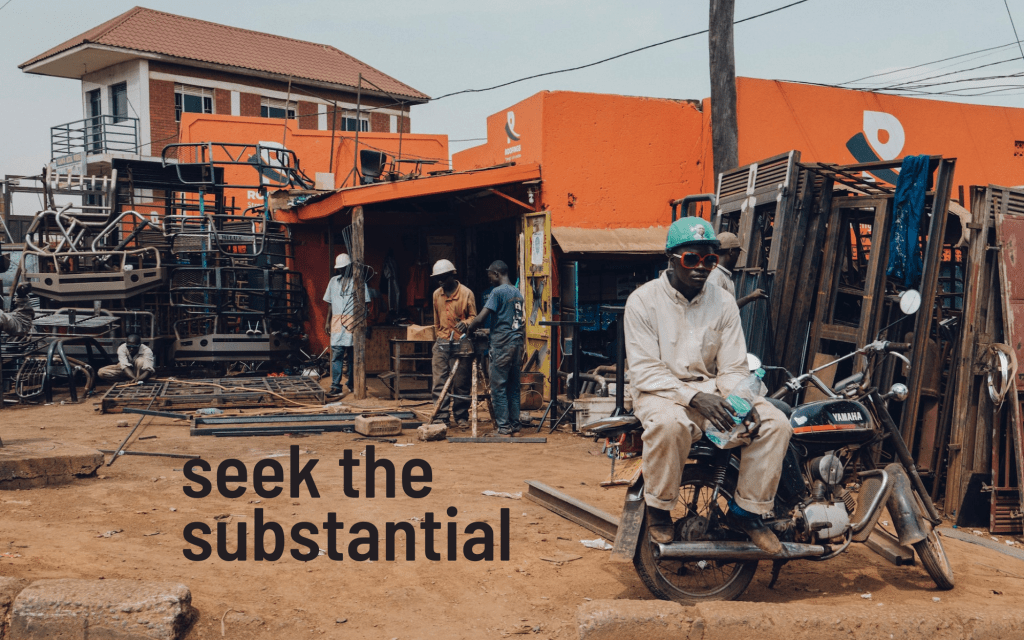
  • unalone in our sorrows

    Summer vibes in Baja.

    Photo by Erick Palacio on Unsplash

    I don’t know where I stumbled on this, but there’s this YouTube channel that cranks out good playlists, something for the background while I work, and it’s great. Leeplay.

    If you are online, you are probably aware that Hank Green announced that he has curable lymphoma. Hank and John Green run a YouTube that’s wildly popular and they are also both successful authors. Hank’s announced that he has cancer has over 7 million views. What I wanted to focus on was John’s response about the response and other things. One of the “other things” was a prayer that I absolutely loved:

    “I pray that we may be justified in our hope and unalone in our sorrows.”

    That hits all of the right buttons no matter your religious affiliation and it is a prayer for anyone at any time. I have always loved the quote at the top of my header on Twitter from the Maori, which asks, what is the most important thing in the world? It is the people. It is the people. It is the people.

    That’s pretty simplistic on my end and I need simple things in my life.

    I’ve needed glasses for a really long time. I’ve eventually transitioned into needing glasses for near and far and I bought my first pair of transition glasses two years ago and I’ve pretty much hated them since I bought them. the transition aspect of them doesn’t work well, I’m always taking them off in order to read, which isn’t the point at all. All of my glasses have slipped off my nose, but that has nothing to do with having bifocals. I would be fine being glasses-guy, but it’s just never worked out for me. then about a year ago I noticed a brand that’s all sorts of bougie called Roka and they are made in Austin and they looked like they stayed on peoples’ faces because they have all of these good-looking people doing athletic things like swimming, bouldering, running, etc. So I looked at the price and decided that I would need to save up for some big boy glasses. I just got them yesterday and holy shiite they are fantastic. Just in one evening they exceeded expectations, the transition to read is unbelievable, I’m not taking off my glasses to read things and it’s just fantastic. Of course I missed out on their big sale, but that’s life. They are running a sale through the end of Memorial Day, but I also have two 20% coupons (I actually have three, but promised one to my lovely wife) that I’d be willing to mail to anyone that really wants a new pair of expensive, but very good glasses.

  • Not doing anything isn’t okay

    Hello.

    I’ve been missing for a few months. Months that I’ve been busy on the weekends and basically not doing much of anything on the week nights other than drive kids to activities. And I’m not complaining about that. It is often those rides, even if they are for moments, that are the best part of the day. I get to steal the undivided attention of my child.

    This LA Times article from Kevin Baxter had me in tears. It is the story of Dennis Kasumba who is an 18 year old orphan in Uganda and all he wants to do is play Major League Baseball. He shovels cow shit during the day so he and his grandmother have something to eat. Then he works out and plays baseball in between trying to survive. He’s trying to go viral on TikTok with his workouts where he jumps in a barrell with water, tapes water bottles to his legs and drags a tire, bench pressing and squatting a steel bar with concrete on each end and tires. You get the idea.

    But then that’s not even the best and/or heartbreaking part. The best part is that Kasumba’s coach, Paul Wafula, asks that the boys he coach go to the home for disabled and disadvantaged orphans, the children who really have no chance of ever finding a home. The coach said about these disabled children, “These kids also want to be shown love, but they don’t have anyone.”

    There are 2.5 million orphans in Uganda and the thought of helping an orphan seems insurmountable, but you should do something if you can.

    What drives him are the kids. If he gives up, who will pull them out of the slaughterhouse?

    “This is their only hope,” he said, gesturing toward the dusty field.

    Still, he wonders, what’s the point of getting one barefoot orphan off the street if he’s only going to be replaced by another? What’s the point of encouraging Kasumba’s impossible dream if the odds are it will end in failure?

    The point is that not doing anything would be even worse. Just as in baseball, it’s far better to try and lose than to not have played the game at all.

    Not doing anything isn’t okay. This doesn’t just apply to orphans in Africa, this applies to everything, but if someone across the world is doing this with few to little resources then maybe we can do the same thing more often. Oh, and if you’ve read this and you know you aren’t going to read the article, the photos are terrific.

    ####

    What else have I been doing other than attending games and practices? Running a lot. I was supposed to run in a trail race in Arkansas, but the race was canceled because a tornado ran though the park back in April. So I’m going to run my own 50k on the Northeast Texas Trail, starting in Farmersville and just sort of running until I reach 50k. Sounds like a plan.

  • Saturday Morning Things

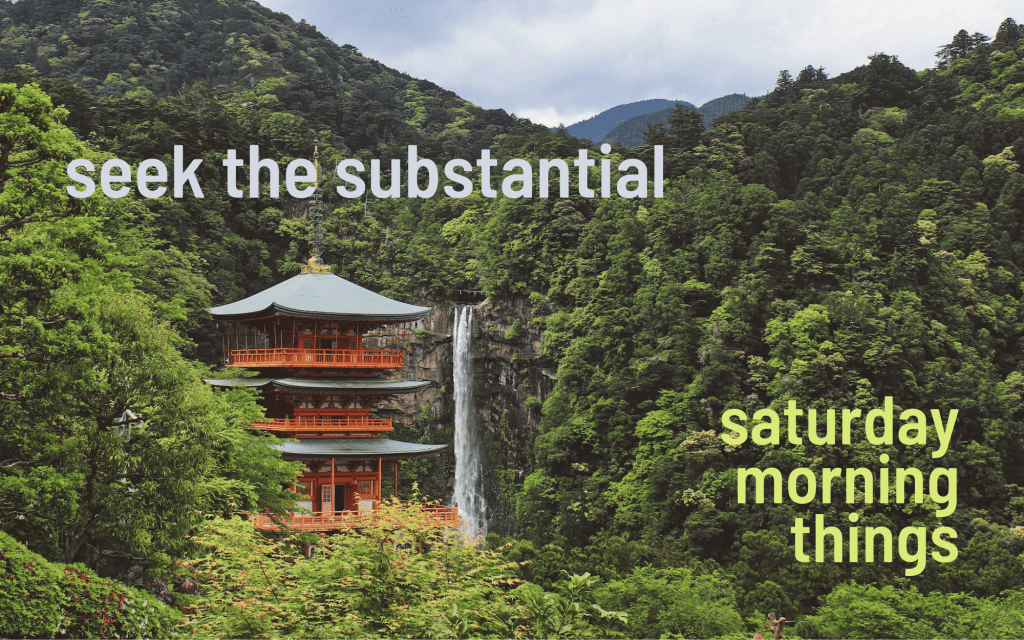
    1. Ever heard of Nachi Falls? Me neither. It’s obviously a standalone attraction in the southeast portion of Japan, but it is also at the end of the Kumano Kodo Pilgrimage Route, a walking route that is over 1,000 years old.

    Photo by Tom Vining on Unsplash

    2. The Ringer’s Brian Phillips with maybe the finest piece of writing I’ve read this year, no joke, on the legend of Pelé, the Brazilian Boy Who Remade Soccer in His Image. Even if you don’t like soccer, this is terrific storytelling.

    So here’s how this goes. In the late 1940s, in the city of Bauru, in the southeast of Brazil, a group of boys sets out to see a dead body.

    The dead body belongs to a pilot. A pilot who has crashed his plane. Actually, it’s not a plane; it’s a glider. Do you know about gliders? I didn’t really know. Picture a small plane without an engine. Another plane tows the glider up into the sky and then lets it go. And the pilot can steer it. Can bank and turn, etc.

    The idea is that you go up in a glider and you soar. But gravity ultimately pulls you down.

    Hopefully gently. But down.

    3. The 2 bike and 1 wheelchair boys finished. 48 days to cycle across the USA, finishing in L.A. with a police escort. A really fun finish.

    4. Every year Semi-Rad’s Brendan Leonard re-publishes this piece about this year being the year to practice maximum enthusiasm. If you’re in a rut, this is a great thing to read to day (or maybe tomorrow) and it is a reminder that bringing joy, or attempting to bring joy to other people’s lives is a good thing. I did buy the Practice Maximum Enthusiasm sweatshirt so I’m fully qualified.

    Do you like to laugh? Most people do, don’t they? Including baristas, waitstaff, and retail personnel. Perhaps you have at some point had a real conversation with one of these people. This can sometimes begin by sincerely asking those people how they are, instead of treating them like a machine that makes you coffee or orders your salad. This opens the door to making them laugh. If you play your cards right, you may be able to high-five them at the end of a conversation.

    Remember yesterday, when you saw that one thing that reminded you of that one friend of yours, and you thought about how if you sent that friend a photo of the thing that reminded you of them, they would smile? But then you didn’t send your friend that photo, and it wasn’t awesome. Don’t do that again.

    5. The only reason I knew about Nachi Falls before you did (I’m guessing that this is accurate, but you may known about it before me) is from Elina Osborne and her taking the Kumano Kudo Pilgrimage walk with her brothers. This is delightful.

  • Saturday Morning Things

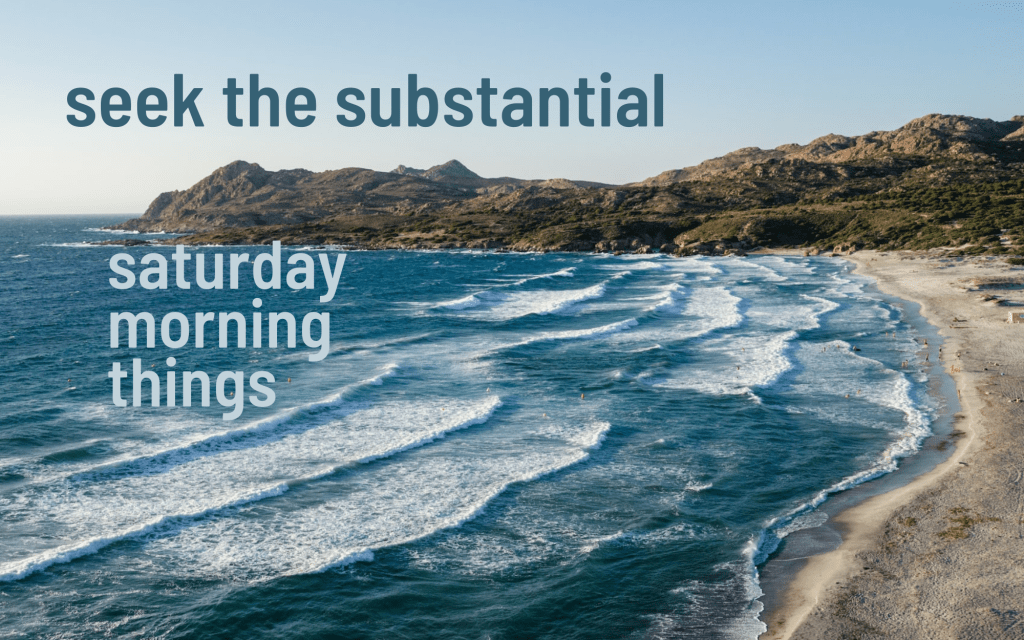
    1. Ever heard of Corsica? Well, maybe you have, it is an island in France, but I would have guessed it was Italian based on the name and historically was a part of Italy at one time, but was annexed by France and was the home of Napoleon Bonaparte. And it is just north of Sardinia, which is part of Italy.

    Photo by Lukas Tennie on Unsplash

    2. Beau Miles is doing 12 days of newness, all leading up until the new year. Things like getting a proper haircut, a massage, a triathlon (but very atypical type of triathlon), etc.

    3. We’ve heard plenty about walls over the past few years, but Laredo and Nuevo Laredo, Tamaulipas are proposing a binational river park for 6.3 miles along the Rio Grande, and an attempt to restore the river and will include 1,000 acres, 500 on each side of the border. I like thinking about new ways to solve problems and there’s no guarantee that this will work, but restoring the river and creating a park between the two cities sounds at the very least something to try.

    4. Don’t you just love how things get found, especialy when it feels as if every inch of this planet has been photographed? Via Live Science, 168 new geoglyphs have been found at Nazca some of which were created 100 B.C to 300 A.D.

    5. Via Colossal, the Scottish town of Newburgh in Scotland has their young children design their Christmas decorations, including a “Happy Nemo”, a red snowman, a dinosaur decorated like a Christmas tree, etc.

    Bonus. A nice historical look at the Christmas Truce of 1914.

  • Saturday Morning Things

    1. Ever heard of São Miguel? Maybe, but most likely no. São Miguel is the greenest of the Portuguese Azores archipelago (the nickname is Green Island). I don’t think I’ve posted this before, but I definitely think it is a new picture. So enjoy!

    Photo by Joao Louro on Unsplash

    2. The 2023 Tournament of Books by The Morning News is a good list of books, 68 total works of fiction, all to be whittled down to the best book of 2023. So, if you need a good fiction book, and yes, you should be reading fiction, even as an adult, this is a great place to start. And the reason you should read fiction is because there is no other vehicle, other than television or movies, that allows you to experience something that someone else is experiencing.

    3. Sort of a long read, The Smithsonian Magazine looks into the likelihood of the existence of King Arthur, going back to text from Geoffrey of Monmouth’s History of the Kings of Britain, which was written in the 12th century, but tells the tale of the sixth century King Arthur. And this is more of an archeological look at the legend than the story itself.

    4. This was really neat, from something called Misconceptions, allows you to scroll through some common misconceptions regarding the continents of Africa, South America, and Europe, for example 2/3’s of Africa is north of the equator.

    5. An interesting interview with Tumblr CEO Matt Mullenweg. Tumblr is a social network, largely used by teens and 20-somethings and in a prior life, it was filled with porn. I actually have used Tumblr previously and should probably resurrect what I had, but as we are watching how Twitter is utilized as a social network, maybe on the other end of the spectrum is Tumblr. Social networks in general are incredibly difficult. And technically, owning a website with any sort of social interaction can be difficult.

  • Saturday Morning Things

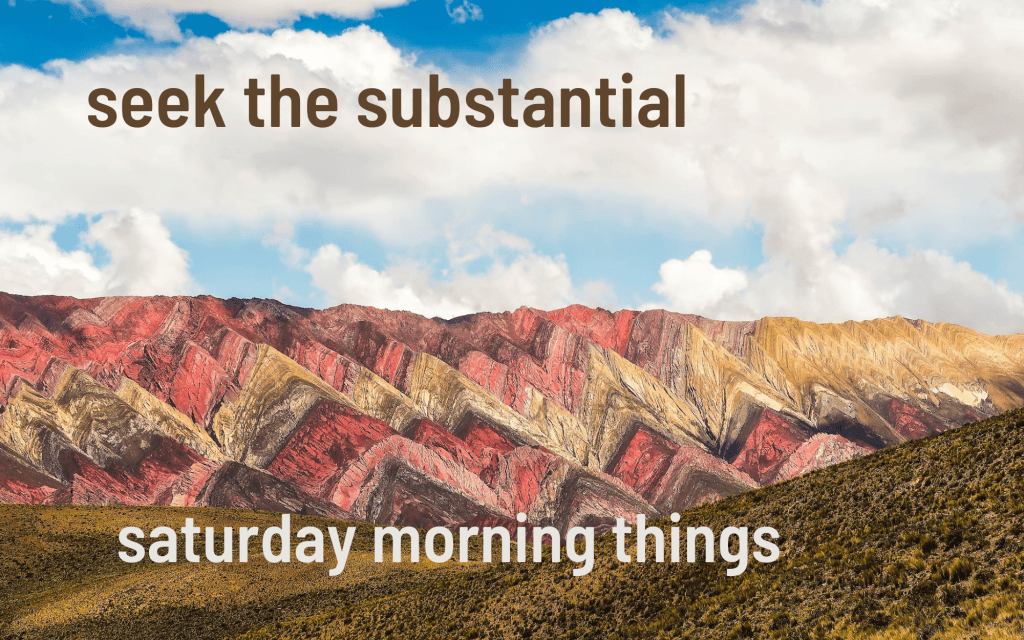
    1. Ever heard of Jujuy? Me neither. Argentina is really good at the soccer, but is probably way underrated in terms of it’s beauty. Jujuy is a province in the northwestern part of the country bordering with Chile and Bolivia

    Photo by Hector Ramon Perez on Unsplash

    2. Francis Cade and Justin Levene are biking across America, from Miami to Los Angeles. The thing that they are doing differently is that Justin is doing this on a hand-bike and so it’s 2 bikes 1 wheelchair and 3,000 miles. They are currently about to hit El Paso, so they’ve gone a decent way thus far. It’s also to raise money for Get Kids Going! (don’t forget the exclamation mark) that helps kids afford hand-bikes and things of that nature. They’ve raised something like $75,000 thus far.

    3. Space is awesome.

    https://platform.twitter.com/widgets.js

    4. It’s almost 2023 and Colossal has a round-up of some very different calendars.

    5. I can’t remember how or when I found this stuff, but at one point in my life, I was looking for a way to track time and I ran across David Seah’s productivity tools, in particular the Emergent Task Planner was something that I used every day to track my time, something that I had to do as an attorney. There would be days where I’d get a phone call and it was easier to jot down when I got on the phone here along with the time rather than trying to open and start a timer on whatever I was working on. It would also allow me to just easily note when I’d be working on something for blocks of my day. I have used different products for different things, Seah has things for large projects, the daily time tracker mentioned above, and tracking weekly things. Visually, I think they’re really great to look at and not just your typical to-do lists.

  • Saturday Morning Things

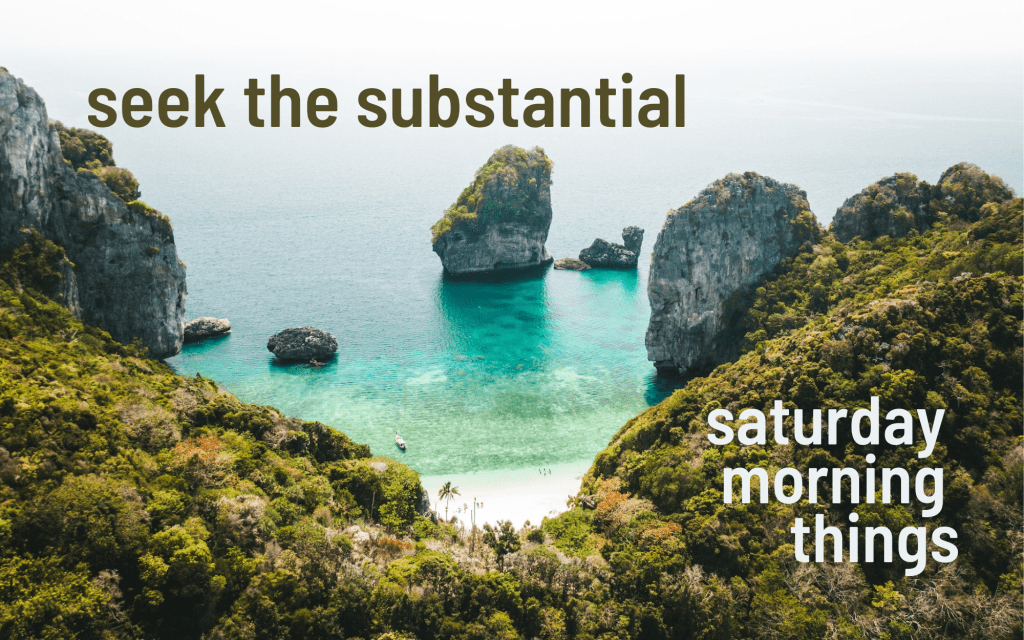
    1. Ever heard of the Phi Phi Islands? Me neither. They are a small group of islands on the southern end of Thailand and they were made famous by the movie The Beach. Thailand is one of those countries where it seems that the natural beauty combined with the beach are unmatched, or the wow to normal factor is off the charts.

    Photo by Jeppe Hove Jensen on Unsplash

    2. Kiwi is way too underrated. The humble kiwi is native to China but you can pretty much get this any place, and I didn’t know this previously, but there are also kiwi berries that I am now desperate to try. I make an attempt to have kiwi every day, it’s 2 for $1 at my local grocer, it has 112% of your daily Vitamin C, 38% of Vitamin K, and 10% of Vitamin E. The other great thing is that fruit tends to go bad quickly and if I stick kiwi in the fridge, they’ll last at least a week, maybe more. Pro-tip? Don’t pick the soft kiwi, firm but not rock hard.

    3. I only know about Charley Crockett because of 91.7 KXT in Dallas, who will play new interesting music. His latest release I’m Just a Clown is super catchy and from his latest album, The Man from Waco. If you want to know a bit more about Crockett, Garden & Gun has a nice interview.

    4. You’ll see this probably Tom Whitwell on the 52 things he learned this year. I don’t know all of the things that I’ve learned and if I were to try to do this, I’d need to make a list starting in January.

    5. The difficultness of this doesn’t even register because I’ve been on a mountain bike once. Bicycling’s Kim Cross on Braydon Bringhurst’s attempt to ride up The Whole Enchilada, which usually done downhill and has an average grade of 37% incline. You can also watch.

  • Saturday Morning Things

    1. Ever heard of La Push? Me neither. It is a small village on the west coast of the Olympic Peninsula. The name “La Push” is from the French La Bouche which means “the mouth” of the Quillayute River and has the westernmost zip code in the United States, 98350.

    Photo by Max Bender on Unsplash

    2. A map of the universe is insane yet beautiful. The map/graph/chart at the end of the page, which shows you where you are and how many billions (with a “b”) of years you are looking back at of various galaxies in order to see because of the speed of light. And I totally realize I’m probably not explaining that correctly, but I understand it in my brain. The smallness of me is a great reminder.

    3. You might think that this is some sort of gag gift, but it is not. I bought the Goshi last year for myself. It is a nylon Japanese shower towel. It replaces your wash cloth that loofa or plastic thing that you’re using. I’ve used this for a year and it’s great. I don’t really ever worry about replacing it because it dries quickly. Doesn’t ever stink because it dries very quickly. And the way that you’re able to scrub your skin is pretty great, better than anything I’ve ever used. It was $15 and I’ve gotten way more than $15 from this purchase because I use it every day and the absolutely ridiculous idea of you explaining what it is to the person you gift it to will be great.

    4. By the end of the century, Africa will have 40% of the world’s population and this article focuses on the part of Western Africa from Adidjan, Ivory Coast, to Lagos, Nigeria.

    “I have worked in China and in India, and that is where most of the attention on cities has been until fairly recently, but Africa is unquestionably the continent that will drive the future of urbanisation. And it is that strip along the coast of west Africa where the biggest changes are coming,” said Daniel Hoornweg, a scholar of urbanisation at Ontario Tech University. “If it can develop efficiently, the region will become more than the sum of its parts – and the parts themselves are quite big. But if it develops badly, a tremendous amount of economic potential will be lost, and in the worst of cases, all hell could break loose.”

    I’m writing about this because I tend to think about Africa more than most, but I think a lot of people tend to not think about Africa much at all.

    5. Van Neistat is the less famous of the Neistat brothers, but he may be more interesting. This video about the resentment and gratitude diagram with new and experienced artists, featuring Tom Sachs. I don’t really know who Tom Sachs is, but I’ve heard his name before as an artist and he’s a living breathing artist that does art things. Tom Sachs has his own Nike shoe. I can’t say that I fully understand artists or why they create what they create, but I am glad that they do. Also, the point of the video, the diagram is on point. I’m not an artist, but when I do have to make something or figure something out, I definitely get the gratitude when I finish whatever it is that I’m doing and I can look back on the work and overcoming the wall.

  • Saturday Morning Things

    1. Ever heard of Ningaloo? Me neither, but it looks badass. Just go read this Wikipedia entry. The name “Ningaloo” means “promontory” or “deepwater” (love that it is all one word because why not) or “high land jutting into the sea”.

    Photo by Ben Carless on Unsplash

    2. I’m finally back. Sort of. I finally am free for the weekend, although my weekends have been free for a while, but with football and writing and everything else, I just haven’t had any time to write. I have time today, so I’m pretty happy about that. I’m actually writing this on Friday night, I’m running with someone tomorrow morning who is training for a marathon and I told him I’d join him for 20 miles.

    And I did a lot of running while I was away. I did run another ultramarathon and I’m quite proud of that. I didn’t run fast, but I also didn’t feel completely beat after I finished, I actually felt pretty good. I ate well, didn’t get sick, walked the uphills and ran everything else. I was within the 12 minute mile mark and did an extra mile over and above the course to get a buff. Yes, for a buff.

    I was also really lucky to have 3 of my law school friends crew the race, which was great, but getting to see and talk to them was really the highlight of my weekend. So happy to see them and we made it clear that we’d do this more and sooner than later.

    https://platform.twitter.com/widgets.js

    3. I’ve consumed so much content, I’m not even sure where I should start.

    I’m first of all absolutely enthralled with the idea that there are trout all over the world. You can find them in Europe, Americas, New Zealand and Australia and would guess that they are in Africa too, but regardless, that’s really far range of place to have a type of fish. Add into the idea that they are searching for the Apache Trout makes this all more interesting, which apparently can only be found in the White Mountains of New Mexico.

    There is no such thing as a bad video that Beau Miles makes.

    The little river right under my nose was sick. I was inspired to see other bad rivers. Ancient catchments with a modern story to tell. Paths of least resistance that have changed rapidly at the hand of humans. Backwaters and drains, for example, places that few of us see as super interesting. Oh, feel the burn on the thighs. Oh, yeah. I’m convinced such places are fascinating to most, but given they often stink and they’re wet and hard to reach, it’s easier to go places that smell nice and have good parking. That is some slippery stuff. I was going to say slippery shit, but it probably is slippery shit.

    4. This is probably going to seem very much off-topic, but here we go. I used to always buy shaving gel. And after years of my sink getting clogged because of  extra gel that you invariable get, because you almost always get too much, I’ve officially switched to shaving cream. I think the can of shaving cream cost $1.34 and I think I’d be able to give this to one of my kids because a can of shaving cream tends to last a really long time. In terms of utility, yeah, the shaving cream works just as good as the shaving gel. The other solution is to have a beard, but that’s not me. I tried last December, or a couple of Decembers ago, and that’s just not me.

    5. Tommy Rivers Puzey was the guy that taught me to run. He doesn’t know me at all, but I know him from iFit, which is the training system for NordicTrack. On a whim, I took off on one of his virtual runs through Greece and I never looked back because he taught me how to train. Rivs got cancer (I’ve never liked that term “getting cancer”.) and is now figuring out life after that. I wrote about Puzey previously, his out-of-body experience as he was in a coma and as near-to-death as someone can be. Those quotes about heaven and hell are interesting to say the least, hell is the love you do not give, and the urgency of treating people no matter who or where they are with kindness.

    Rivs recently ran the New York City Marathon and I have definitely settled into the idea that accomplishing something is about the journey and finishing something really hard is very meaningful.

    “It’s this odd combination of prioritizing it because I feel like my life depends on it for my future well-being, but then also realizing that life is actually happening right now right in front of me,” Puzey says. “Often as endurance athletes, myself included when I was more serious about the competitive aspect of it, we defer any sense of happiness or satisfaction because we somehow think it is going to keep us from achieving our ultimate goal. We spend years or sometimes even decades trying to accomplish that and everything short of that is a failure. And then when we do actually reach it, it feels good for like 15 minutes. This is more meaningful than that.”